
Lesson 1 – Money, Wealth and “Wellth”
Learning Objective
Identify the concept of money as distinguished from wealth and create your personal definition of wealth
Money Makes the World Go Round
The expression “money makes the world go round” means that money is very important, and a lot of events could not happen without it.
In some ways it’s true. Money is an essential part of our lives and it impacts nearly everything we do from the job we have, to the house we live in and car we drive, the choices we make, our relationships, self-esteem, health and our wellbeing.
Much of our time and attention is dedicated to earning it, spending it, investing it, saving it, ignoring it and wishing we had more of it!
But What is Money?
Money is only valuable because we all know
and accept it as a form of payment
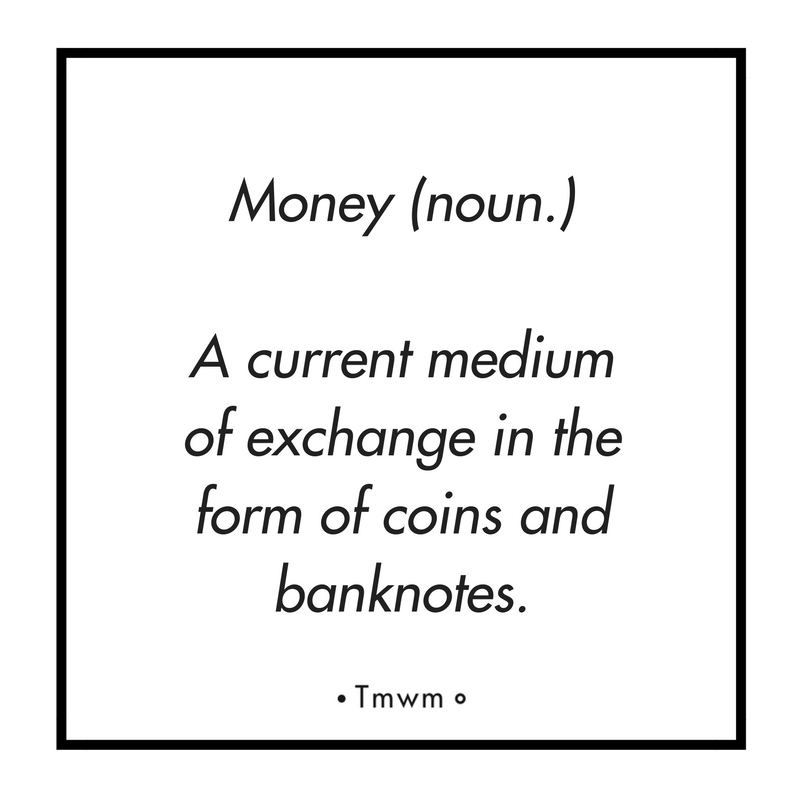
In the economic and finance worlds, the definition of money is typically “a method of exchange”.
But a simpler way to think about it is that money is a form of energy and money places a value on our time, talent, knowledge, services, skills and more. Today we may trade our time and knowledge for money (in our job or career), or use it to purchase something that has been made by someone else (who has talent and skills that we don’t). Put simply, we trade money for things that we need in our lives that we don’t have the skills, time or knowledge to be able to create ourselves. Like a loaf of bread, some clothes, a car or even legal advice.
When it comes to money, as with all energy – it has to flow and needs balance – a lack of flow can cause distress or blockages and too much money either coming in or going out will cause an imbalance or stresses in our lives.
The value of money
Most of us aspire to have more money – naturally because, as we just learnt, money places a value on many aspects of our world. What we forget is that money can’t buy us everything:
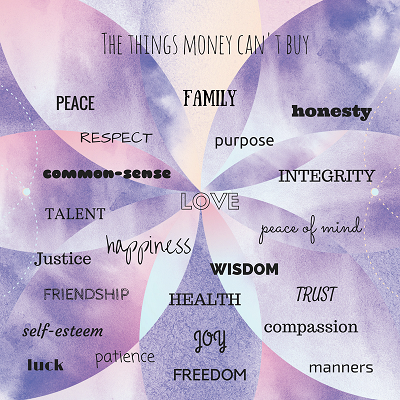
It’s therefore important that we uncover what it is that we are actually aspiring towards and whether more money can deliver that or not.
Mindful Question / Reflection: Can you name 5 things in your life that you value and that you couldn’t buy even if you had more money?
Throughout this e-course “Your Journey to Mindful Wealth”, we’re going to keep exploring our personal values, goals and dreams. The key is to understand what we value personally and what will bring us more happiness and abundance.
Is Money ‘Good’ Or ‘Evil’?
Respecting money and understanding that it can be a positive and negative influencer in our lives is important.
We have probably all heard at some point in our lives that “money is the root of all evil.” The phrase is actually a misinterpretation of the scripture in 1 Timothy 6:10.
For the love of money is a root of all kinds of evil. Some people, eager for money, have wandered from the faith and pierced themselves with many griefs.
If we consider this quote in full, it is referring to the emotions around money, not money itself. Money is something neutral and there is nothing wrong with having more money. Where problems may arise in life is when money begins to control us (instead of us controlling it) or where money becomes the pure motivator for our decisions and actions.
To take control of our money involves understanding what money means to us personally and how we can best manage our own thoughts, emotions and behaviours in order to be able to use money as a tool to generate more wealth and better our wellbeing.
Money is Not Wealth
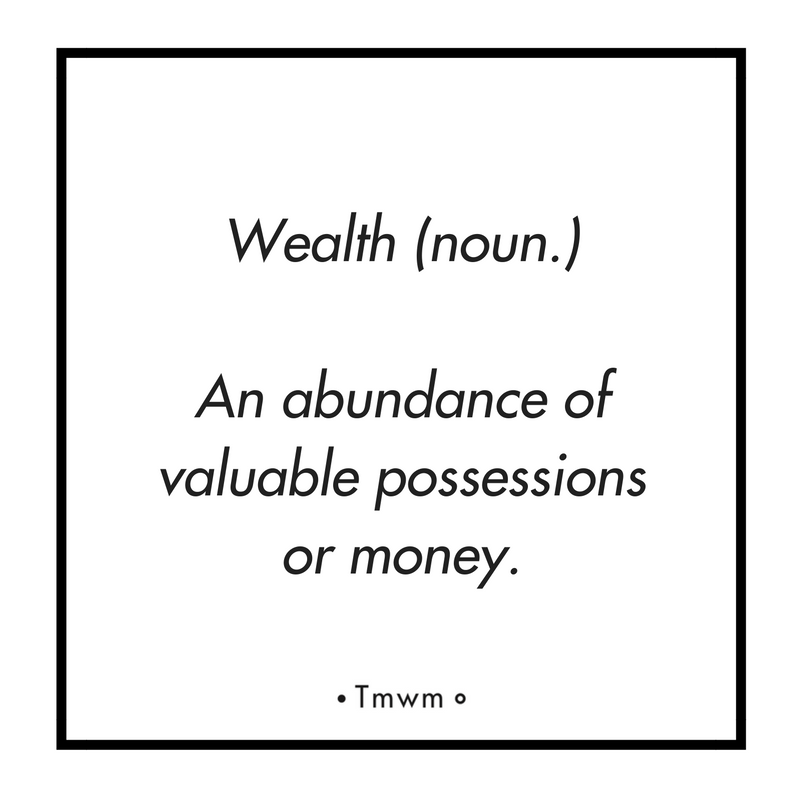
In society we often use the terms money and wealth interchangeably.
Wealth accumulation is often defined as the generation of more income or assets to create a better financial position.
Money is a tool that can help us obtain and achieve wealth, but it’s not wealth itself. You may think you truly value money, but it’s more likely to be the peace of mind, freedom or security that money brings that you truly value.
As we learn more about our relationship with money, a new way of thinking emerges about what it means to be truly wealthy.
Not all of us are born into money and wealth. Wealth isn’t just available to some of us, although, it’s accessible to all of us. We just need to learn how to create and keep it!
Defining Wellth
This is my definition of Wellth: when we have an abundance of anything in our life that we truly value. This means (wealth) wellth can be something material, a resource, an experience, a person or a feeling.
Now it’s your turn!
Many of us don’t know that we personally get to define what it is that makes us wealthy and then we can work towards it. Please ensure you take the time to complete this exercise … you may discover that becoming wealthy and having abundance is easier than you think!
Mindful Question/ Reflection
Think about what is really meaningful in your life. List the top 5 to 10 things you truly value.
|
|
My Example:
|
|
|
|
| Then look at your list and summarise them into your top 3 priorities. | |
|
|
My Example:
|
|
|
|
Reflection
This exercise provides a reflection on what we value for a happy and meaningful life (wellthy) vs. the importance we place on money, vs. the value it delivers to us (wealthy).
What’s interesting is that for all the times I’ve run this exercise with many groups in the past: everyone has a unique definition. While there are common themes, we all value different things.
Mindful Question / Reflection
Most people are surprised to discover that money doesn’t usually feature in their top 3 or even top 5 things that they feel they absolutely need in their life to feel truly wealthy. Is that true for you?
Optional Activity: Reflect and write in your journal about what you would need in your life in order to feel truly wealthy?
When you’re ready, click to move on to lesson 2 of this module. You’ll learn how money impacts your wellbeing … and start exploring ways to reduce money stress!


