
Lesson 4: Sharing Wealth with Others
Learning Objective
Understand how Generosity and Gratitude influences our abundance
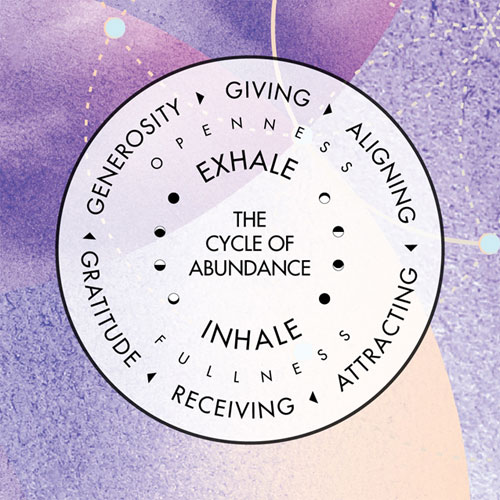
The cycle of Abundance
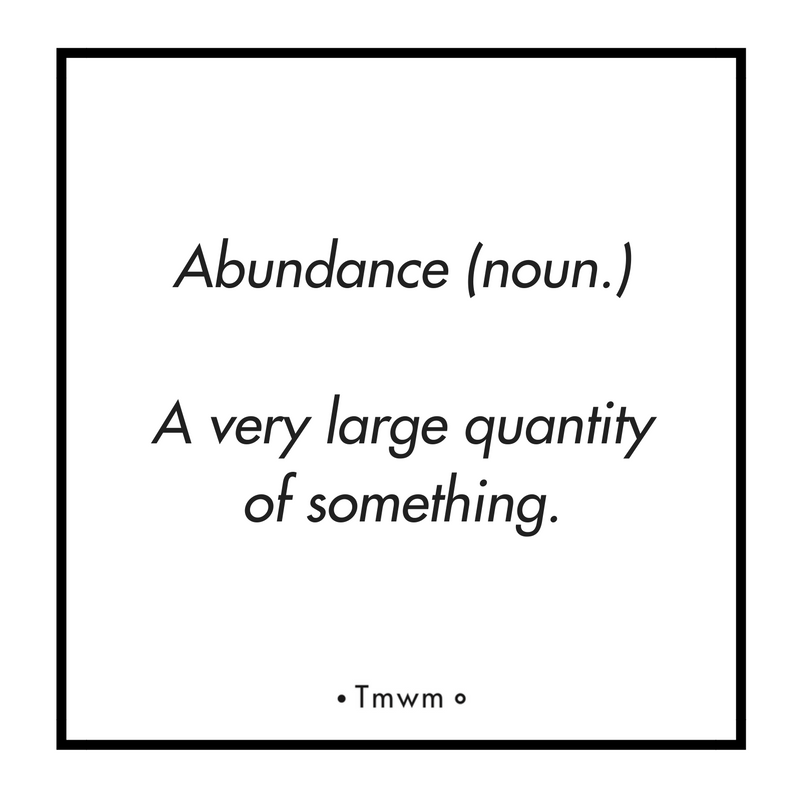
Abundance is something we often attribute to our material possessions – the more we own the more abundant we feel – in truth, abundance is more of an attitude than a description of the things we possess or the money we have.
Feeling gratitude and being generous are the foundations of abundance.
Most of us are very lucky to live in Western countries, we are accustomed to our way of life and often become complacent, focusing more on what we don’t have than what we already do.
Perhaps you know someone in your life, or whilst travelling may have seen people who appear to own very little yet they live abundantly, how is that so?
Feeling abundant in life is a matter of perspective.
Abundance is a perspective we can choose in any moment.
To live an abundant life is to appreciate as often as possible all of our experiences; joy, sorrow, purpose, generosity, connection, comfort, and achievement.
Gratitude & Generosity
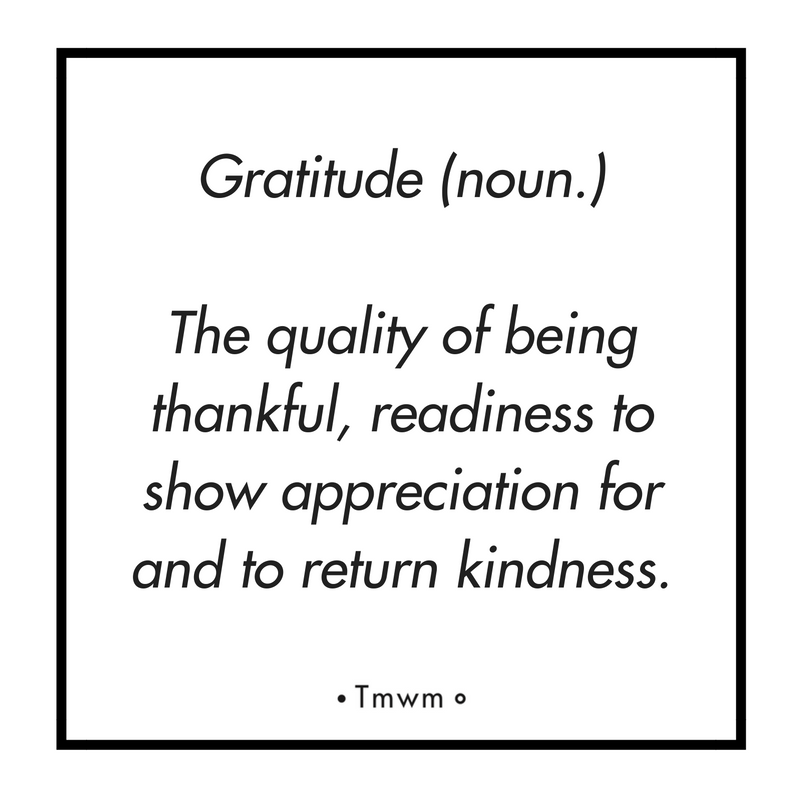
Generosity and Gratitude are two principles that can fast track us on our journey to abundance.
When we are grateful it shows that we do not take things for granted. We take stock of all the amazing things in our life that we have, no matter how big or small, and which others may not have.
As we have already explored, gratitude is a way for us to express thanks for the generosity that has already been expressed to us.
Research shows that those people who practise gratitude tend to show higher levels of wellbeing and happiness and tend to feel better about themselves and their lives.
Expressing gratitude helps to promote generosity in ourselves and in others too as when we express gratitude to someone, they’re more likely to repay favours, be more generous and express gratitude to others in return.
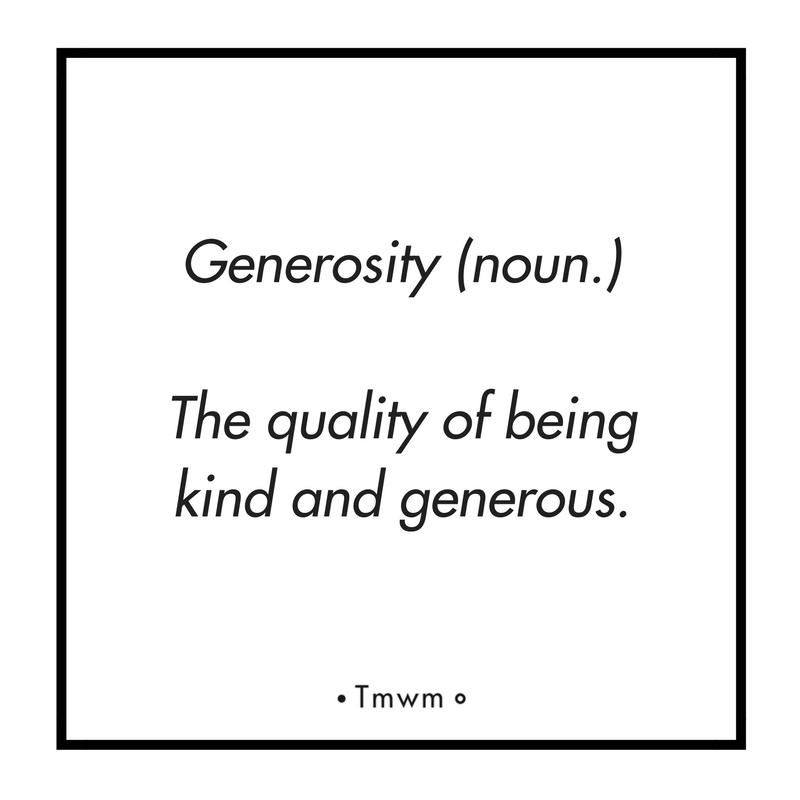
What we can give to others is not limited to our money. We have many other assets and resources such as our love, time, attention, energy and knowledge that when we can share. When we give to others we gain so much back.
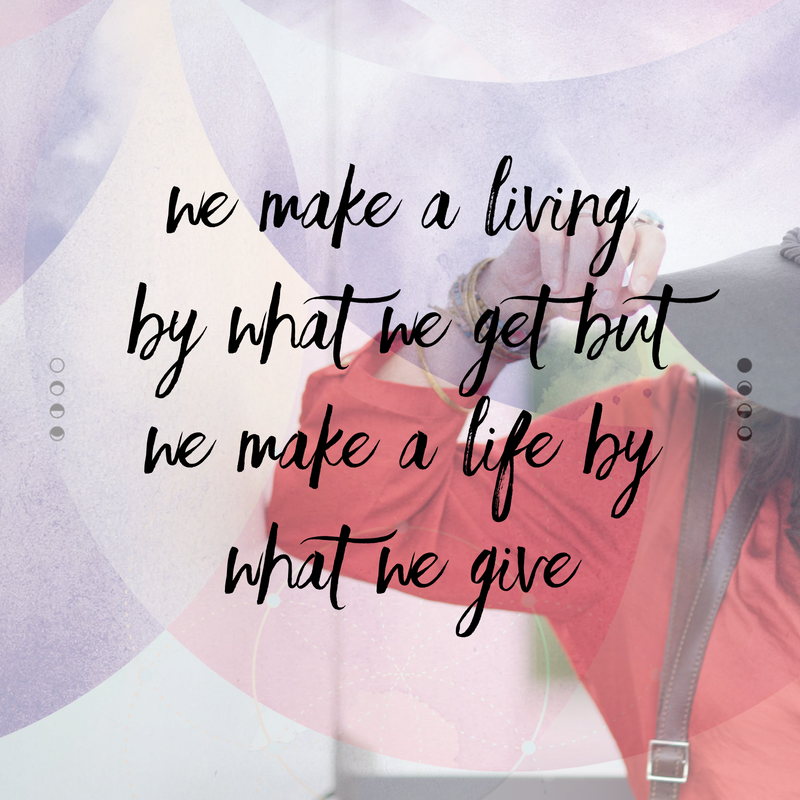
More and more studies are now highlighting the benefits of generosity for our physical and mental health. Generosity can help to reduce stress, enhance our sense of purpose but it also creates connection as when we give to others, we make them feel closer to us and we also feel closer to them.
Generosity also produces within us a sense that we are capable of making a difference in the world and that by addressing the needs of those around us we can help shape our community into a healthier one.
There are countless charities and good causes that need our support, once we know our values and passions, whether it be family, environment, health, poverty, education or animal rights we can align this with an organization that supports that cause and help them in their work.
Being generous should come from a place of compassion not out of pity or a sense of ego.
We shouldn’t be generous to fix others or in order to gain thank you or appreciation. We should be generous to support others in achieving a more stable and dignified position in life.
Many of us think that generosity is proportional to income. We sometimes use income as an excuse for hardening our hearts and withholding gifts that we may be able to give to others. But it doesn’t matter how little or much you give. We can start small, giving away one dollar or five.
Generosity can take the form of money, but it can also take the form of our time and effort, kindness, knowledge and respect.
We all have so much to offer the world that is much more than just money. We have our time, attention, our advice, energy, skills, love, talent and knowledge. Yet often many of us hold back from giving away too much as though we’re almost too afraid to stand out or that our contribution won’t be enough.
But we don’t have to be Oprah, Gandhi or even Mandela to make a difference in the world. We don’t have to be super smart, successful or rich. All we have to do really is to be ourselves and offer what we have and what we feel can be of value, no matter how small or insignificant we feel it may be.
Mindful Exercise: Here are some ideas on ways that we can give back, try one this week:
Volunteer: It’s proven to be good for our health and our happiness. When we volunteer we can often temporarily forget about our own problems by shifting our focus to helping others.
Donate clothing, furniture, and other possessions to those in need. This has the added benefit of de-cluttering and minimizing all the stuff that we don’t use or need.
Participate in charity events and fundraising events.
Tutor or teach others. Write a personal development blog, or start writing a book to share your views or experiences as a way to help others when they find themselves in similar situations.
Support crowd funding ventures
Lend money through micro-finance companies like www.KIVA.org
Mindful Question/Reflection: What can I give to someone today that will assist them to live a better life?
How does it feel when I open and give to others?
There is one quote of Wayne Dyer’s that I think has particular significance in our wealth practice:
“If we change the way we look at things the things we look at will change.”
Optional Activity: Create an Intentional Giving Plan
In order to take a more mindful approach to wealth we first need to change some of the perceptions and beliefs that we may hold about money. Sometimes these beliefs may have been with us for a very long time, perhaps even for our whole life.
A shift in perspective
Let me explain using an example: I know for the most part, the majority of us aren’t too fussed about paying tax. Often I sense slight resentment about having to part with our money and pay it to the tax office.
But what if I told you that paying tax was actually an act of generosity and something to be grateful for, would you laugh?
Let me explain: We only start paying tax as adults when we earn income or make money through the sale of an asset that we own. Currently, we aren’t required to pay any tax until we earn over $18,200 per year. The amount of tax we pay increases as our income increases. So the more we earn, the more tax we will pay. If we have low income or are elderly, then we’re generally provided with a tax offset to assist in reducing the tax we pay.
When it comes to paying tax, often people feel some resentment for having “lost” a portion of their hard-earned money. Some people even go to crazy lengths to avoid paying tax altogether!
But what if instead of viewing tax as something we are losing, we viewed it as something we were giving?
Viewing it as our contribution to creating a safer and better society and helping others who are in need.
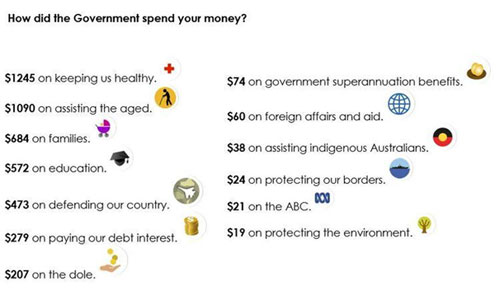
We often fail to consider how our money is being used for good to improve things like healthcare and education, supporting the elderly and sick and those people unable to work. It also goes towards protecting our environment as well as providing support to indigenous Australians and foreign aid to other countries in need.
Let’s assume you earn $50,000 each year, your tax bill to the Australian Tax Office in 2015 would’ve been $7,797. This money would have been spent as follows:
Mindful Activity Have you ever wondered where your tax money will go?
Use this interactive calculator to find out exactly where every one of your tax dollars went:
http://www.smh.com.au/business/federal-budget/federal-budget-2014-where-will-your-tax-dollars-go-20140513-3883a.html
Thinking about tax in this way shifts our perspective from a negative to a positive. We realize that we are all contributing to a strategy to make Australia a better place and to support us, its citizens. So the more tax we pay, the more help we are providing to others.
It shows that by paying tax we are practising gratitude and generosity.
Mindful Activity: Gratitude Challenge
There are many great online challenges to help you cultivate an attitude of gratitude in your life. If you’re up for a challenge, why not try the following:
- Download a Gratitude App – such as 21 Day Gratitude Challenge for android users
- Download the Gratitude Journal for ipad and iphone users.
- Or try the 21 day gratitude challenge – http://gratitudechallenge.com/downloads/gratitude-calendar.pdf


