
Lesson 4: Getting comfortable with debt

Learning Objectives
Understand the role of debt and how to use it effectively in your life.
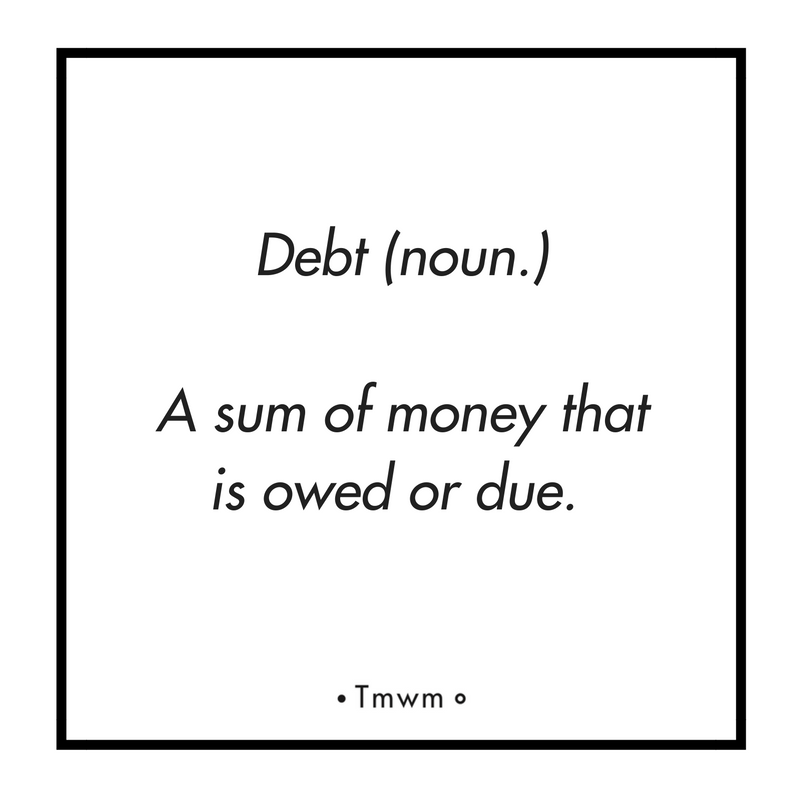
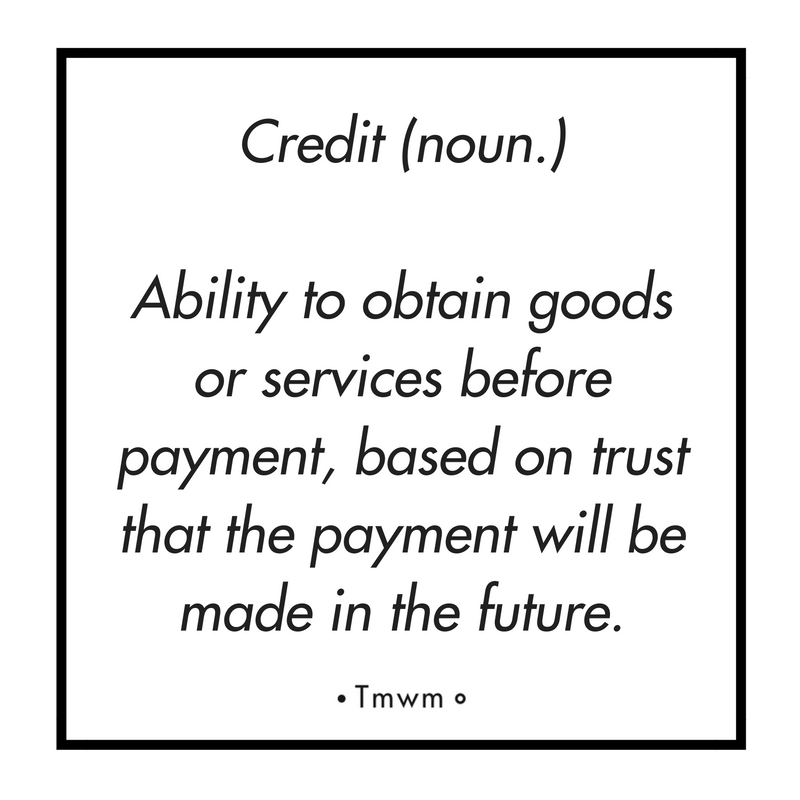
In the finance world, debt and credit are two words used interchangeably.
In this course we’re going to focus less on the ins and outs of debt and more on what it actually is and how to manage it.
Common signs that we may have too much debt is when we can only afford to make the minimum repayment each month, regularly miss payments or pay late and we have to borrow money to pay off other debt.
Debt isn’t necessarily bad, particularly if we know how to use it correctly. Debt only becomes a problem if we misuse it, or it gets out of control and we end up owing a lot more than we can afford to pay off. When it comes to financial stress, most of the time if can be attributed to the level of money that we owe and uncertainty on our ability to pay it back.
While a limited amount of debt isn’t necessarily bad, an excessive amount can often delay us from reaching our goals.
Think of debt like putting on weight. If we gain a few extra kilos we can decide to eat less and exercise more and we can generally lose the weight without too much problem. But if we wait until we’ve gained twenty kilos, it’s going to take a lot more effort and a longer time to lose the weight. Comparably, if we get into a bit of trouble with our debt and spending habits, we can often get back into financial shape just by deciding to spend less and not use our card as much, or at all. But if we wait until we’re struggling with debt and owe a large amount, then it’s going to take us longer to repay, cost us more and we may have less solutions available to us to fix the situation we’re in.
Be mindful with debt, because:
- Debt is a commitment.
- Debt can be addictive.
- Debt can place limits on our options and opportunities, particularly, if we don’t understand it properly, or manage it well.
While credit can be difficult to manage most of us need to use credit at some point in our lives to purchase a home, finance our education, buy a car, or start or scale our business. So it’s very important we know how to manage debt so as to not limit our future opportunities.
Debt or credit is often viewed as an enabler – it gives us the opportunity to have something now rather than later and to purchase or pay for the things that we can’t necessarily afford.
Buying things on credit or using debt means we are using future income and because we can’t pay for that item in full now, we must pay charges and incur interest on the amount that we borrow. We then end up paying for that item in the future and using our future income that we could otherwise be spending saving or investing elsewhere.
As an investor, our aim should be to have money flowing to us, not flowing away from us.
Debt represents a flow of money away from us in the form of repayments.
Not all debt is created equal and by that we mean that some debts are better than others. Debt used to purchase an asset that produces an income or will increase in value is better than the debt we have for things that won’t increase in value. The latter is referred to as consumer debt and we often use it to buy household items, clothing, holidays and other expenses.
A great investment that we can actually make is paying off interest on our debt. Repaying the debt will free up our cash flow and provide us with a return that is likely to be higher than other investments.
If we have multiple debts it can sometimes be overwhelming to know how and what to focus on paying off first.
There are two ways that we can approach paying off multiple debts. We continue to make minimum repayments on all debts but with any surplus income we have we can focus on either a head vs. heart approach:
 The logical (head) approach:
Paying off the debt that has the highest interest rate first – this is the logical way to do it as this debt is costing more to repay.
The small wins first (heart) approach:
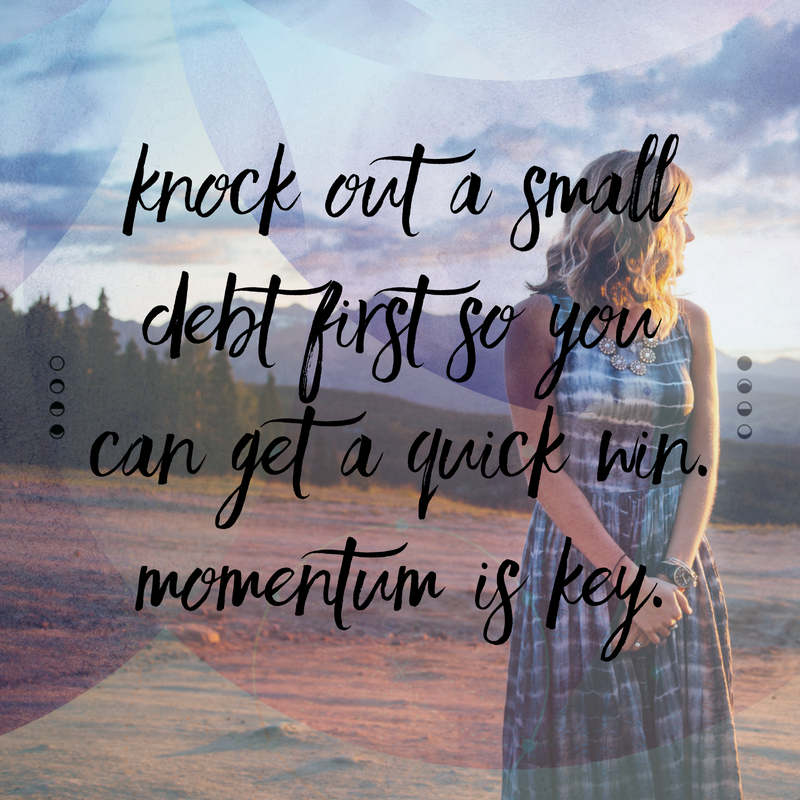
Paying off the debt with the smallest amount owing first as this will be the quickest for us to accomplish. Paying out the smallest debt first will help us get started and once repaid it helps to free up more cash flow towards paying our other larger debts.
It doesn’t matter what option you chose as both options work!
Mindful Exercise:
While it can sometimes be daunting looking debt in the eye, awareness it is the first step to getting out of a debt cycle.
List all your personal debts, except your mortgage on a piece of paper.
List them from smallest to largest in the table provided.
Write down the minimum repayment required for each debt in the table.
Write down the date due for the minimum repayment, this will help to ensure the payments are made on time.
For the smallest debt, in addition to the minimum repayment, see if you can make any additional repayments to repay it as quickly as possible.
Keep track of your progress every day or week.
Once the smallest debt has been repaid, celebrate your win.
Move on to the next-smallest debt and repeat.
Celebrate big time when you pay out your last debt.
Alternatively, you might want to list the debts starting with the highest interest rate and aiming to pay this one off first.
Instant Gratification
We live in a have to have it right now kind of society.
If we want to speak to someone, we call or send a message.
If we want to watch something, we stream it, or download.
If we want to buy something, we buy it – even if we don’t have the money, we use credit.
But when we use credit to make – now, I can’t wait purchases – we are using our future income. Rather than saving up for it, we are using money we haven’t earned yet. Whilst this can make sense for some bigger purchase items that could take us years to save up; a car or a house, it doesn’t make sense if it’s a small material purchase; new clothes or a holiday.
By wanting and having to have, everything now, we are paying for our purchases well into the future, which our future selves will not be thankful for.
Instant gratification is known as the immediate attainability of satisfaction and happiness. It is a way of experiencing pleasure and fulfilment without delay.
Instant gratification is short-lived happiness. We get what we want when we want it. It comes, it goes, and it fades. There’s no real lasting level of satisfaction.
We need to consider bringing meaning to our lives.
We need to learn to slow down and enjoy a more enduring way of life. We can do this by training our mind to appreciate long-term happiness and respecting that some things take time, patience and effort.
Delayed gratification is the answer; renovation of a house doesn’t happen overnight – it takes effort, patience and time but the reward is so satisfying. Having a baby is another process of delayed gratification, we have to wait nine months. Some of the more traditional life achievements such as finding love, getting married, creating a successful career, having children and owning a home are more examples of the milestones in life that don’t happen overnight.
#Truth: Life requires patience, persistence and dedication.
Mindful Questions / Reflection: How much debt should I have?
Is my debt out of control?
How does debt make me feel?
What are the things have I bought that I’ve used debt to acquire?
Have the things I’ve used debt for been worthwhile uses of my future income and the commitment it represents in my life now?
Credit Cards
Credit cards have higher interest rates than other forms of credit. Buying items with a credit card will always cost you more than if we pay with cash because of credit card fees and interest payable.
#Truth: Australians owe around $33 billion on credit cards! That’s an average of about $4,200 per cardholder.
Just because we have a credit card, doesn’t mean we have to use the whole credit limit available to us.
What happens when we need access to cash instantly?
What happens if we need money in a hurry to pay an overdue bill or meet an unexpected expense? As tempting as it may be to consider a pay day loan or short term finance solution like those advertised on TV, payday loans can be a very high cost way to borrow money and there may be better and cheaper alternatives if we need cash.
If we’re struggling to pay a bill, electricity, water or rates, then it pays to ring the biller and negotiating a payment arrangement that works for us. You may be surprised how most companies and banks will work with us to create a payment plan.
The worst thing we can do is nothing. Bills won’t just magically go away and by ignoring them the late payment fees and interest incurred can make the bills much larger than the original amount.
If you do opt to borrow money instead of making other payment arrangements, before signing any contract, make sure you check what happens if you are late paying or can’t make a repayment.
Credit Rating
Whether we realise it or not, when it comes to our finances, our credit ratings are one of the biggest assets or liabilities that we may have. Many of us aren’t aware that each time we apply for a new loan, finance at a department store or even sign up for a contract for a mobile phone, rental property, electricity or gas then it’s likely that it will be recorded on our credit report.
When we borrow money, a lender looks at information about our credit experiences to decide whether to lend us money. Our bill-paying history and the number and types of accounts we have, whether we are late paying bills or making payments, how much we have in total debt are all considered.
Mindful Exercise –
Order a copy of your credit report!
In Australia, you can get a copy of your credit report from these credit reporting agencies. Some agencies have a form to fill out on their website, others allow you to email them your details or send them a letter. If you’re overseas, contact us for a list of agencies.
You’ll need to provide the credit reporting agency with the following information to get a copy of your report:
- Full name
- Date of birth
- Current address
- Previous address
- Day time phone number
- Current or previous employer
- A copy of your driver’s licence, passport, birth certificate or Proof of Age card
- A document issued by an official body which includes your name and address (eg. rates notice, utility bill or bank statement)
#Truth: When we’re applying for money, lenders look at:
- Our character: do we pay bills on time and will we repay the debt?
- Our collateral: what we own, the lender could get in the event we don’t pay our debt.
- Our capacity: do we have enough income to repay the debt. Our capital: what is our net worth and other assets?
If our report has a poor history of us paying debt on time or missing payments, then they’re likely to consider us a high credit risk and may refuse us credit or charge us a higher interest rate.
It’s therefore important we make an effort to pay our bills on time and to only apply for credit that we really need. It also pays to check our credit report regularly for inaccuracies or in case someone else has applied for credit in our names.
You can order a free copy of your credit report once a year if you can wait 10 days, but you’ll need to pay if you want access immediately.
Mindful Reflection Questions: Is this thing that I’m using the credit for something that I really need?
Can I afford to make the repayments each month to pay it off?
What if I can’t work for a while (if I’m sick or out of work) will I still be able to repay my debt?
Can I afford to tie up my future income to pay off this item?
Will I still want or use this item once I’ve finally finished paying it off?
Is this the best source of funding for this item? Am I getting the best interest rate?


