Lesson 3: Decision Making Skills
Learning Objectives
Apply a framework to make financial decisions that support our wealth and wellbeing.
Wayne Dyer famously said “Our lives are the sum total of the choices we have made.” While this quote is true, it can make our decision-making a little daunting.
There is no such thing as money decisions.
Our decisions are about more than just money. They are also about our time, values and energy, relationships and whether or not we are moving closer or further away from our ideal future life or future self.
Our money decisions are in fact life decisions.
We live in a world of overwhelming choice.
Indecision can be a major roadblock in reaching our personal, financial, career, relationship growth. Fear about making the right or perfect choice can often lead to indecision and frightens us into inaction.
Research shows that when we are faced with too much choice we tend to avoid making any decision.
Hard Choices - Life Trade-offs
When a choice is easy, it’s generally because one alternative is better than the other.
When a choice is hard, it’s generally because one alternative is better in some ways, the other alternative is better in other ways but neither options is better than the other overall.
Even when we are well informed to make a decision – a hard choice is difficult because there is no best option – both options are good.
When faced with a decision between two choices we often feel like we need to make a trade-off like:
- Working in a job which provides financial security vs. pursuing work we love or are passionate about.
- Listening to others opinions vs. following our own path and making our own way.
- Getting into debt now vs. Saving for a few years and waiting to purchase later.
- Taking a promotion that means more stress vs. keeping your current less stressful job (less money).
- Marrying for security vs. marrying for love.
- Asking for financial help vs. Not asking as we’re too proud and want to maintain our independence.
- Move to our dream house or location vs. staying where you know and are close to friends and family.
What most of us do in hard choices is take the safest, easiest option.
The fear of the unknown is a common motivator for the selection of one choice over another. But just because it’s safe, it may not always be right. We often make a safe decision only to feel some form of regret or remorse in the future for not having taken the risk.
When we’re faced with hard choices, we shouldn’t try and figure out which alternative is better but instead we should focus on which decision is right for us in this moment.
Mindful Question/ Reflection:
What makes you happy and brings you closer to who you really are and what you really want?
Head Vs. Heart
I’m sure we’ve all experienced the feeling of being torn between two options.
Imagine for a moment that you’re shopping online and see a really nice dress that will be perfect for a wedding that you’re attending in few weeks. You check the size, and availability of the item and see a message to say the item is low in stock – there are only two left. You’re now faced with the possibility of missing out. I’m sure at this stage your heart is telling you how great you’re going to look in it and how happy you’ll feel once you own it. But your head is probably telling you not to buy it as you’ve already picked out a dress that you own and you’ve got rego, rent and insurance bills all due this fortnight.
Who do you listen to?
Is your head or heart shouting at you the loudest?
We’ve all heard the saying listen to your heart it knows best, but how do we know this is actually the case?
Do we trust our feelings over our thoughts or do we follow our emotions or our logic?
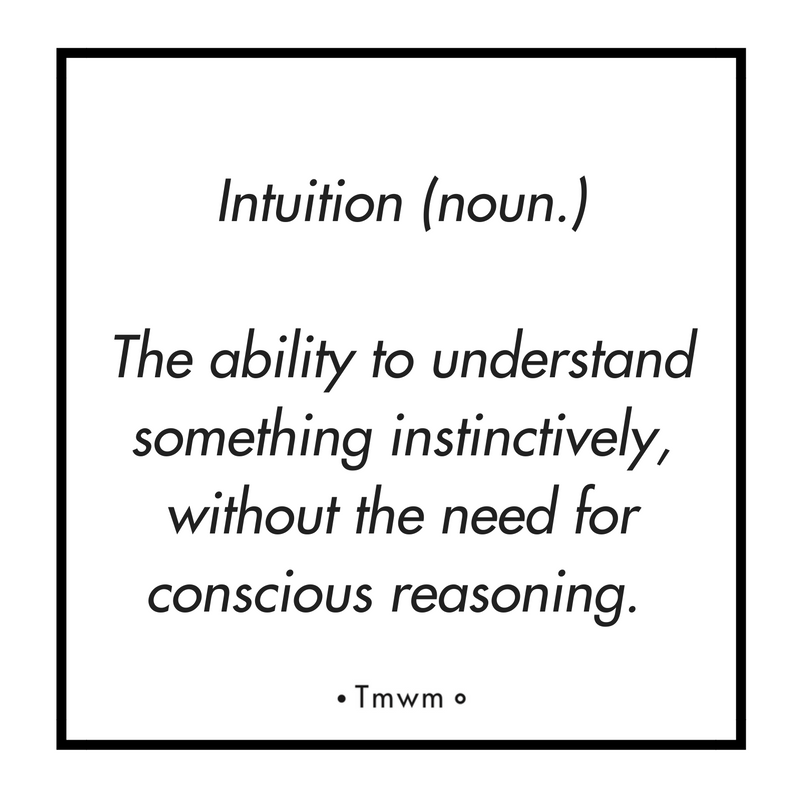
Using our intuition is when we’re using our gut feeling. Intuition is a combination of our past experiences and personal values. It pays to take our intuition into account, as it’s a reflection of our life learning. But we need to be careful as our intuition can often be based on perception, rather than reality. While it’s fine to use only intuition to make a decision or judgement, it’s best used if it’s of a simple nature or something that needs to be done quickly.
When we use our logic we are using the facts and figures in front of us to create reasoning. This process on its own can sometimes ignore emotional aspects or past experiences.
Do you need or want it?
Our Money Profile
Mindful Question/Reflection: How do you tend to make decisions? Do you tend to weigh up the facts or go with your gut?
Each of us has a different style of making decisions.
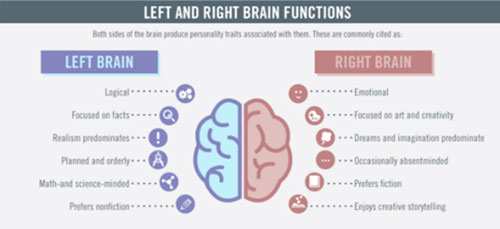
Of our journey profiles, The Dreamer and The Thinkers are more likely to use their intuition to perceive patterns and connections when collecting information to make a decision. These are functions of the right hand side of our brain. For the decision making process The Dreamer is likely to use a sense of feeling, whereas the Thinker is more likely to use fact.
The Doers and The Makers are more likely to use their senses to collect facts and details in order to make a decision. The focus is on the figures (the left side of the brain) in order to make best judgement. When it comes to actually making a decision, the Doer is likely to make quick decisions based on perception, whilst the Guardian uses their best judgement to make a decision.
Mindful Exercise: Your Journey Profile
Download your journey profile and reflect on your preferences:
It makes sense that our best decisions are made when we use both our intuition and reasoning so if we have a preference for using one side of our brain over another, we may need to put more emphasis on using a more balanced approach. Having this insight into our decision-making preferences can actually help us to make better decisions